

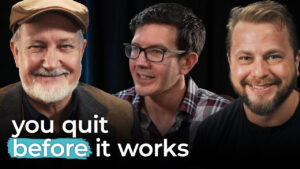



Dear Reader,
Performance marketing feels safe — until the bill comes due.
If you are running a $3–$10 million home service company, you probably believe you have one of three problems:
You don’t have enough leads.
The leads you have are too expensive.
Or the leads you’re getting are low quality.
Those are real frustrations. They feel operational. They feel urgent.
But in this episode, Jake Williams introduces a fourth problem — and it’s the one most owners aren’t thinking about.
Sustainability.
Next year.
The year after that.
And the year after that.
Can you sustain what you’re doing right now?
Because if most of your marketing engine is pay-per-click and pay-per-lead, you are not building land you own. You are borrowing relationships. You are, as Jake puts it, sharecropping on Google’s land.
And when everyone rushes to the same auction, the auction gets expensive.
Over the last four years, cost per lead in home services has climbed nearly 88%. Not because you forgot how to run ads. Not because your agency got lazy. But because the system itself is designed as an efficient auction. When everyone bids, the price rises. Early adopters made a fortune. Late adopters are funding it.
Performance marketing is attractive because it is measurable. It is defendable. It produces a report you can show your team. It fills the board quickly.
But what fills the board quickly is not always what builds a business permanently.
Jake walks us through how Google’s “Zero Moment of Truth” reshaped marketing thinking, how short-term metrics quietly displaced long-term brand building, and why mass media — the very thing most owners abandoned — is now relatively underpriced.
This is not an anti-Google rant. It’s a maturity conversation.
If you’re doing $3–$10 million and feel like what got you here isn’t getting you further, this episode will gently challenge your assumptions. It won’t shame you. It won’t mock your past decisions. It will simply ask:
Do you own the mental real estate of your customer?
Because when someone types your name into Google, you’ve already won. When they type “air conditioning repair near me,” you’re in an auction.
We also talk about the painful transition required to move from short-term dependence to long-term strength — the overlap period where you must fund both. It takes a war chest. It takes discipline. It takes emotional staying power.
And yes, we close with a story about King Cakes in New Orleans — because sometimes the clearest marketing lessons don’t come from dashboards, they come from human behavior.
If you’ve been feeling stuck, this conversation is for you.
Not to scare you.
To steady you.

In This Episode, You'll Learn:
- Why most home service companies feel stuck
- The hidden fourth problem business owners aren’t thinking about
- How Google’s Zero Moment of Truth reshaped marketing thinking
- The performance marketing trap and short-term obsession
- The 88% cost-per-lead increase nobody can ignore
- Why mass media is now underpriced
- The painful but necessary brand-building transition
- The King Cake lesson on scarcity and demand
Episode Chapters & Summary
1. The Three Problems Owners Think They Have
Jake opens by outlining the three “felt needs” of business owners: too few leads, too expensive leads, and low-quality leads. These symptoms dominate conversations, but they aren't the root issue.
Key Takeaways
- Owners focus on volume, cost, and quality
- The problem feels operational
- The deeper issue is strategic
2. The Fourth Problem: You Don't Own the Land
Jake introduces the problem most owners miss: sustainability. If you rely on pay-per-click and pay-per-lead, you're borrowing relationships, not building them.
Key Takeaways
- Digital leads are rented, not owned
- Borrowed attention creates long-term risk
- Brand equity equals mental real estate
3. The ZMOT Spell
The conversation shifts to Google's “Zero Moment of Truth” and how it reframed marketing around search. While rooted in partial truth, it redirected massive budgets toward Google's ecosystem.
Key Takeaways
- ZMOT elevated search above all other media
- Measurement became the priority over effectiveness
- A grain of truth was amplified into doctrine
4. Performance Marketing Took Over
Data shows a dramatic shift from high-attention media (TV, radio) to low-attention media (search, social). What's measurable became more important than what works long term.
Key Takeaways
- Short-term metrics feel safer
- CMOs optimize for quarterly proof
- Long-term brand building was deprioritized
5. The Cost Explosion
Jake shares data showing an 88% increase in cost per lead over four years in home services. As everyone bid in the same auction, prices rose and quality declined.
Key Takeaways
- PPC is an efficient auction
- Early adopters benefited; late adopters pay
- The treadmill is speeding up
6. The Transition Pain
Roy explains that moving from digital dependence to brand-building requires enduring a painful overlap period. You must maintain short-term volume while funding long-term strategy.
Key Takeaways
- Brand building is not instant
- Financial staying power is essential
- Courage determines who survives the transition
7. The War Chest Principle
Todd emphasizes that businesses must prepare financially before making the shift. Without reserves, panic will drive them back to short-term tactics.
Key Takeaways
- Discipline funds freedom
- Sacrifice precedes scale
- Emotional stability supports strategic patience
8. The King Cake Lesson
Roy closes with a story about a New Orleans bakery that earns $2M in seven weeks by aligning perfectly with demand. The lesson: speak to what customers already care about.
Key Takeaways
- Get in step with existing desire
- Scarcity amplifies demand
- Marketing succeeds when it reflects customer truth